Professional Ant Control In Partington

Youngs Pest Control provides expert ant removal in Partington. We eliminate infestations quickly and effectively to keep your home or business pest-free.

ants on dirt and bread crumbs on the table, insect infestation in the kitchen, need for detection

Professional Ant Control Services in Partington

Youngs Pest Control provides professional ant treatments in Partington M31 for homeowners and businesses experiencing persistent ant activity indoors, outdoors and around commercial premises.

Ants are constantly searching for food and moisture, often travelling along established routes between nesting sites and nearby properties. In residential areas of Partington, trails may develop through paving joints, garden borders and patio areas before entering buildings through small gaps around doors, walls and pipework. Properties near Central Road may experience increased activity during warmer periods when worker ants expand their search for food and water.

Early signs of an infestation often include visible ant trails, groups of ants gathering around food preparation areas and activity near door thresholds, patios and ground-level entry points. Properties close to the Manchester Ship Canal can provide favourable nesting conditions beneath paving, within soil and around landscaped areas where colonies remain hidden while workers continue to forage.

Although shop-bought products may temporarily reduce visible numbers, they rarely eliminate the colony itself. Our ant treatments in Partington focus on locating nesting activity, identifying entry points and targeting the source of the infestation to provide longer-lasting control.

Why Choose Youngs Pest Control in Partington

Fast Response

We provide a fast response with 24/7 availability, ensuring your pest control needs are addressed quickly and efficiently.

Fixed Prices

You know exactly what you'll pay before work begins, giving you complete peace of mind and confidence.

Local Services

As a local service, we respond quickly and know the Partington area well, ensuring fast, reliable pest control solutions.

Accredited

We're members of the National Pest Technicians Association, so you can trust our professional service.

Need Help? Call Us On 0161 776 9832 For Expert Pest Control Advice On How To Identify Pest Infestations And Help Solve Your Pest Problem.

Years Of Experience
35 +
Success rate
99.9 %
Average Review Rating
4.4 -5
Jobs Completed
100 K+

Why Ant Problems Are Common in Partington

Ants are common in Partington because gardens, patios and paving edges give them plenty of sheltered places to nest. In M31, homes close to green spots such as Cross Lane Park may see more ant trails during warmer weather. They often follow tiny gaps around doors, air bricks and wall edges when searching for food or moisture. Kitchens, bins and pet bowls can attract worker ants once a trail has been established.
Older brickwork, extensions and paved driveways can also leave small entry points. DIY sprays may reduce visible ants, but they may not reach the source of the nest.

Solve Your Problem in 3 Steps

Get In Touch

Select an Appointment

We're on our way

Common Signs Of An Ant Infestation

The most common signs of an ant infestation are regular ant sightings, visible trails, ants gathering around food, and activity near entry points such as doors, windows, pipework, or cracks in walls. You may also notice small soil mounds outside, flying ants during warmer months, or ants repeatedly returning after cleaning or DIY treatments. 

  • Visible ant trails – Ants travelling in a line between their nest and a food or water source.
  • Frequent indoor sightings – Regularly seeing ants in kitchens, bathrooms, pantries, or other areas of the property.
  • Ants around food sources – Ants gathering around food, crumbs, pet food, or waste bins.
  • Small soil mounds – Piles of soil appearing in lawns, flower beds, driveways, or near building foundations.
  • Discarded wings – Finding shed wings near windows, doors, or light fixtures after a swarm.
  • Flying ants – Large numbers of winged ants around the property, particularly during warmer months.
  • Ants entering through cracks and gaps – Repeated activity around windows, doors, pipework, or wall openings.
  • Activity in walls or hidden spaces – Ants emerging from skirting boards, wall voids, or flooring gaps.
  • Ants around moisture sources – Increased activity near sinks, drains, leaking pipes, or damp areas.
  • Recurring ant problems – Ants returning despite cleaning efforts or DIY treatments.

When to Call a Professional

If ant activity continues to increase or keeps returning, there is likely an established colony nearby. Youngs Pest Control can identify the ant species, locate hidden nests, and provide effective treatments to eliminate the infestation and help prevent it from coming back.


Common Ants Found in the UK

Black garden ant — Lasius niger
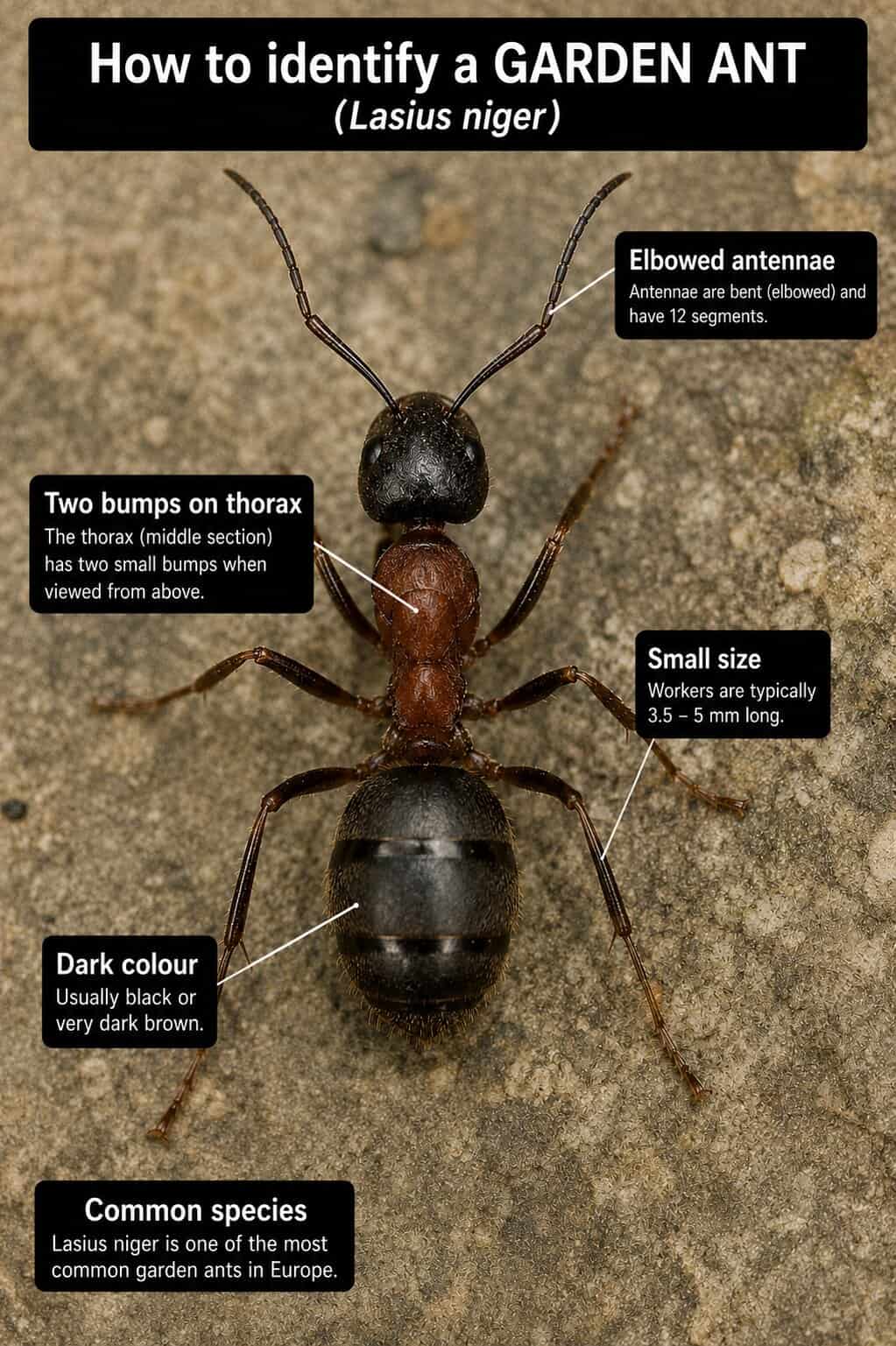
black garden ant

The black garden ant is the most common ant species found in UK homes and is often the main cause of domestic ant infestations. These ants usually enter properties in search of food and water, particularly sweet foods, crumbs, pet food, and moisture.

Worker ants are typically dark brown to black and around 3–5mm long. They are often seen forming trails across kitchen floors, around cupboards, near doors, or along skirting boards as they travel between the nest and a food source.

Yellow meadow ant — Lasius flavus
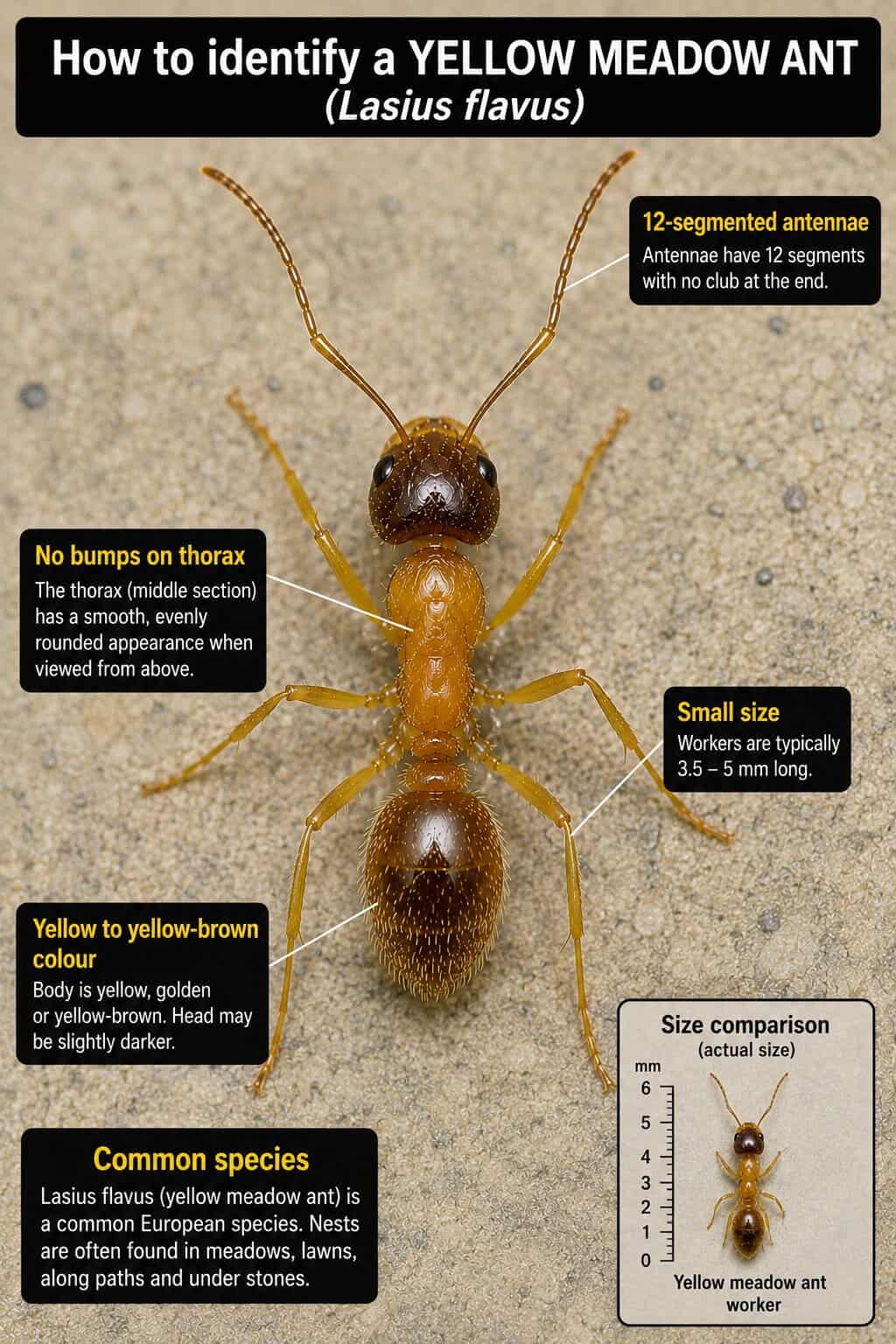
Yellow Meadow Ant

The yellow meadow ant is commonly found in lawns, gardens, grassed areas, parks, and landscaped spaces. These ants are usually yellowish-brown in colour and are often noticed because of the small soil mounds they create in lawns.

They are less likely to become a major indoor pest, but they can cause concern when nests appear across gardens, lawns, borders, or outdoor areas around a property.

Red ants / stinging ants —Myrmica rubra
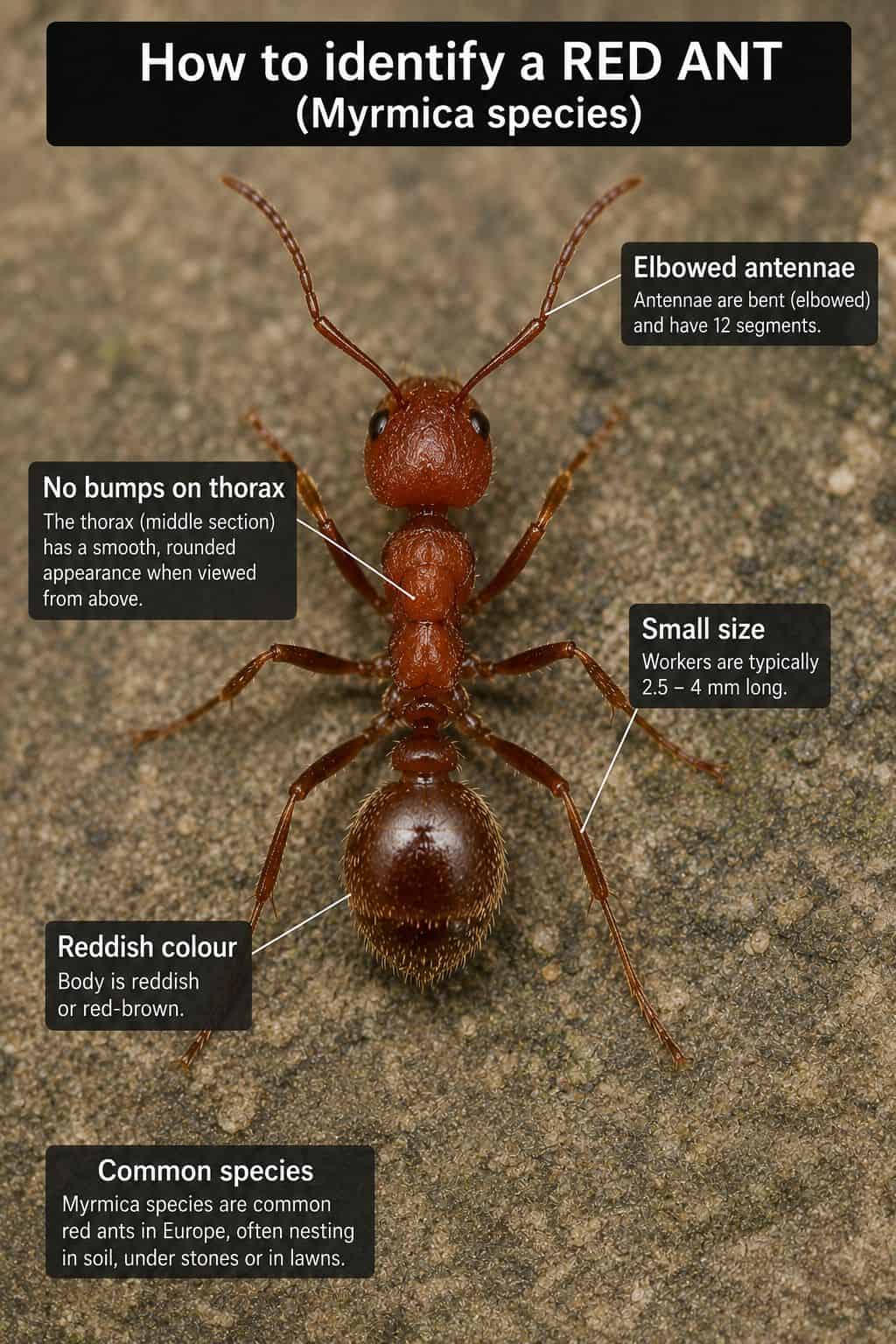
Red ant

Red ants, also known as stinging ants, are usually found outdoors in gardens, damp soil, lawns, under stones, beneath paving, and around borders. They can bite or sting when disturbed, making them more of a concern in areas where people sit, walk, garden, or where children and pets play.

They are particularly relevant for garden, patio, lawn, and outdoor ant control treatments.

Pharaoh ants — Monomorium pharaonis
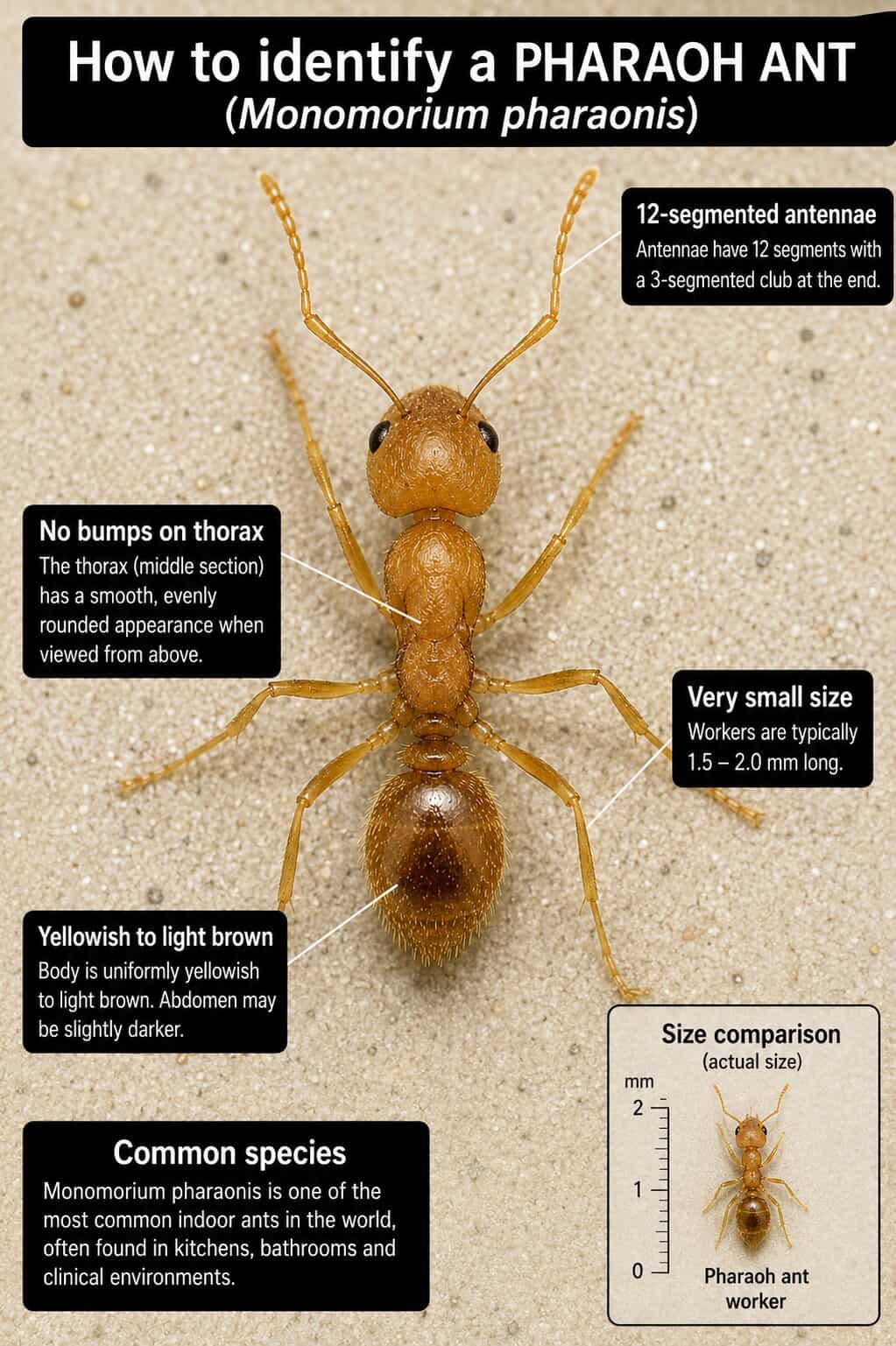
Pharaoh ant

Pharaoh ants are less common than black garden ants but can be a serious issue in heated buildings and commercial environments. They prefer warm indoor areas and may be found in blocks of flats, hospitals, care homes, food premises, hotels, and other buildings with consistent warmth.

Pharaoh ant infestations need careful treatment, as incorrect control methods can cause colonies to split and spread to new areas, making the problem harder to manage.

Other Ant Species Found in the UK

Several ant species are found throughout the UK, although some are encountered far more frequently than others. While black garden ants are the most common cause of domestic ant infestations, other species may be found in gardens, lawns, commercial premises and heated buildings.

  • Ghost Ant (Tapinoma melanocephalum) – Ghost ants are small ants recognised by their pale legs and abdomen, which contrast with their darker head and thorax. They are usually found indoors in heated buildings and can quickly establish colonies around kitchens, bathrooms and food preparation areas.
  • Roger’s Ant (Hypoponera punctatissima) – Roger’s ants are tiny brown ants that prefer warm, damp environments such as basements, bathrooms and wall voids. Although uncommon, they can occasionally infest residential and commercial properties affected by moisture problems.
  • Pavement Ant (Tetramorium caespitum) – Pavement ants commonly nest beneath paving slabs, patios, driveways and pathways. Their colonies can become established close to buildings, allowing workers to forage indoors in search of food and water.
  • Argentine Ant (Linepithema humile) – Argentine ants are an invasive species known for forming large interconnected colonies. Although rare in the UK, they can become a significant pest where established due to their ability to spread rapidly and outcompete other ant species.

Our Ant Treatment Process

Inspection

We start by carrying out a detailed inspection of the affected areas to identify the ant species, locate possible nesting sites, and understand how the ants are entering or moving around the property. This helps us choose the most suitable treatment for the type and level of infestation.

Treatment

Once the source of the activity has been assessed, we apply professional ant treatments to target active trails, entry points, nesting areas, and the wider colony where possible. The treatment method used will depend on the ant species, the location of the nest, and whether the problem is indoors, outdoors, or both.

Prevention Advice

After treatment, we provide practical advice to help reduce the risk of ants returning. This may include guidance on food storage, cleaning routines, moisture issues, sealing entry points, and areas around the property that may be attracting ant activity.

Recent Ant Control Visit in Partington M31

Ant Treatment Near The Manchester Ship Canal

Our technicians were called out to a semi-detached home in Partington M31, near the Manchester Ship Canal. The homeowner had noticed ants crossing the kitchen tiles, and our technician traced the activity to a small gap by the rear door frame before applying a targeted ant treatment. We advised wiping away food residues, sealing the door frame gap once activity reduced and keeping an eye on the patio edge.

Ant Control Close To Sinderland Brook

We treated a terrace house in Partington M31, close to Sinderland Brook. The customer reported ants appearing near the utility room, and our technician found activity tracking in from a narrow paving gap along the rear wall before applying a targeted treatment. We advised clearing food residues, reducing moisture by the back door and monitoring the gap before sealing it.

Our Happy Customer Reviews

Our Pest Control Experts Cover The Following Areas Near You.

We provide professional pest control services throughout Partington, the borough of Trafford, covering M31. We also work in nearby locations that include:

We also treat all types of pests — see our Partington pest control page for more.

How Weather Affects Ants In Partington

 Weather shifts influence ant behavior, with heavy rains often flooding nests and pushing colonies indoors. Hot, dry spells also drive ants into kitchens and bathrooms in search of food and water. Understanding how changing conditions affect ants helps you stay prepared and stop infestations before they spread.

Weather in Partington, Greater Manchester

Loading date...

Loading current conditions…

Frequently Asked Questions

How much does ant treatment cost in Partington?

The cost depends on the size of the infestation and the treatment required. Contact us for a quotation.

Are ant treatments safe for children and pets?

When applied correctly by trained professionals, treatments are designed to be used safely and responsibly. Specific guidance will be provided following treatment.

How long does ant treatment take to work?

Results vary depending on the species and colony size, but activity often reduces significantly within days of treatment.

Can ants return after treatment?

Most treatments reduce ant activity within a few days, with full results usually seen within one to two weeks.

Scroll to Top
