
How Can We Help?
When Do Spiders Start Entering UK Households?
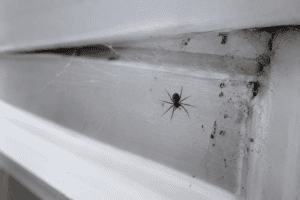 If you’ve ever spotted a large spider running across your living room floor in September, you’re not alone. This is the time of year when many UK homeowners suddenly notice spiders appearing in bedrooms, bathrooms and other parts of the house.
Although spiders can be found indoors throughout the year, UK spider season generally begins in late August or early September and continues into October. During these weeks, certain species become much more visible, particularly the large house spiders that often cause alarm when they appear unexpectedly.
Interestingly, the increase in sightings isn’t necessarily because spiders are coming indoors to escape the cold.
Why Are There More Spiders in Houses During Autumn?
The main reason is mating season. Male house spiders become more active during late summer and early autumn as they search for females.
Many of these spiders have already been living inside the property, often hidden behind furniture, beneath floorboards or in other undisturbed spaces. When males begin searching for mates, they leave their usual hiding places and may be seen running across floors or climbing walls.
This explains why a spider that seems to have appeared from nowhere may actually have been living in your home for months.
Which Spiders Are Most Common During Spider Season?
Giant House Spiders
Giant house spiders are responsible for many of the large spider sightings reported during autumn. They have long legs, brown bodies and can move surprisingly quickly. Despite their intimidating appearance, they are generally harmless to people.
These spiders are often spotted running across carpets or along skirting boards, particularly during the autumn mating season.
False Widow Spiders
False widow spiders, including the noble false widow, can be found around buildings, window frames and sheltered corners. They are usually less inclined to run across open floors than giant house spiders.
Although false widows can bite, this is uncommon and generally happens when a spider is accidentally trapped against the skin. Most bites cause relatively mild symptoms, although reactions can vary.
Cellar Spiders
Cellar spiders have extremely long, thin legs and small bodies. They are commonly seen in ceiling corners, garages and other sheltered indoor areas.
Unlike wandering male house spiders, cellar spiders tend to remain in their webs. They can be found indoors throughout the year and are often mistaken for harvestmen, sometimes called daddy longlegs.
Do Spiders Disappear After October?
Not entirely. As the autumn mating period ends, large house spiders generally become less noticeable, but many spiders remain active or sheltered indoors throughout winter.
Some species are well adapted to living inside buildings and may complete much of their life cycle without ever going outdoors.
Finding a spider in December or January is therefore perfectly normal, even though sightings tend to peak earlier in autumn.
Can You Stop Spiders Coming Into Your Home?
It is difficult to prevent every spider from entering a property, especially when some are already living inside. However, a few simple measures may help reduce unwanted encounters.
Check window and door seals for gaps, remove webs from areas where you don’t want them and consider fitting insect screens to frequently opened windows. Reducing unnecessary outdoor lighting near entrances may also help limit the flying insects that attract some spiders.
Keeping storage areas reasonably tidy makes it easier to spot spiders and reduces undisturbed hiding places.
Peppermint oil and other scented products are sometimes suggested as spider repellents, but there is insufficient reliable evidence that they provide lasting protection.
Should You Be Worried About Spiders in Your House?

Most spiders found in UK homes pose little threat to people. They also play a useful role by feeding on flies, moths and other small insects.
If you discover a spider indoors and would prefer it elsewhere, you can carefully capture it using a glass and a piece of card. However, some house-dwelling species are better adapted to indoor environments, so relocation to a sheltered area may be more appropriate than exposing them to harsh weather.
For most households, the occasional spider sighting is a normal part of autumn rather than a sign of an infestation.
Need Advice About Spiders in Your Home?
Spider season is a familiar annual occurrence across Greater Manchester, Cheshire and Merseyside.
Youngs Pest Control is a family-run business with over 35 years of experience. If you’re experiencing unusually high numbers of spiders or are concerned about other pest activity around your property, our team can provide professional advice.
For further information about professional pest management, visit the National Pest Technicians Association.
Contact Youngs Pest Control on 0161 776 9832 or 07845 815 261 for assistance.