
How Can We Help?
What Is the Difference Between Honey Bees and Bumblebees?
Honey bees and bumblebees are two of the most familiar pollinators found in UK gardens. Although they are often mistaken for one another, they differ considerably in appearance, nesting habits and the way their colonies develop.
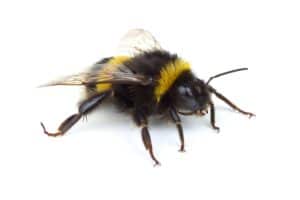
The easiest difference to recognise is their body shape. Honey bees are generally slimmer and less hairy-looking, while bumblebees have rounder, noticeably fluffier bodies. However, there are several other differences worth knowing, particularly if you’ve discovered bees nesting around your property.
Honey Bees vs Bumblebees: Key Differences
| Feature | Honey Bees | Bumblebees |
|---|---|---|
| Appearance | Slender, golden-brown or dark brown | Rounder, very hairy, often brightly banded |
| Typical worker size | Approximately 12–15 mm | Often 10–20 mm, depending on species |
| Colony size | Thousands of bees | Usually dozens to a few hundred |
| Nesting locations | Tree cavities, wall voids and beehives | Underground cavities, grass tussocks and sheltered spaces |
| Honey production | Store substantial quantities of honey | Store small quantities of nectar |
| Colony lifespan | Can survive for several years | Usually lasts one season |
| Pollination | Collect pollen and nectar from many flowers | Some species can also perform buzz pollination |
 How Can You Tell Them Apart?
Honey bees have relatively streamlined bodies with fine hairs covering their thorax and parts of their abdomen. Their colouring varies from golden-brown to darker shades, usually with less striking bands than many bumblebee species.
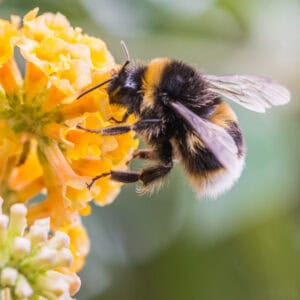
Bumblebees are typically stockier, with dense body hair that gives them a rounded, fluffy appearance. Many UK species have distinctive yellow, black, white or orange markings, although these vary considerably.
When watching bees visiting flowers, bumblebees often appear bulkier and noticeably hairier than honey bees.
Do Honey Bees and Bumblebees Live in the Same Types of Nests?
One of the biggest differences is how their colonies are organised.
Honey bees live in large, established colonies that can contain tens of thousands of individuals during summer. They construct wax combs inside sheltered cavities, including hollow trees, wall spaces and managed beehives.
Bumblebee colonies are much smaller. Depending on the species, they may contain fewer than 100 workers or several hundred at their peak.
Bumblebees frequently nest in abandoned rodent burrows, beneath sheds, inside compost heaps or among dense vegetation. They create clusters of wax cells and small storage pots rather than the extensive, regular combs associated with honey bees.
Where Do Bumblebees Build Their Nests?
In UK gardens, bumblebee nests are often discovered accidentally while gardening, moving stored materials or investigating activity beneath a shed.
Different species prefer different nesting locations. Some establish colonies underground, while others use spaces above ground, including bird boxes, old nesting material and sheltered cavities.
A queen usually establishes a new colony during spring after emerging from hibernation. She initially gathers food and raises the first workers herself before the colony grows.
Unlike honey bee colonies, most bumblebee colonies naturally die out towards the end of summer or autumn. Newly mated queens survive separately and overwinter before establishing new nests the following year.
Do Honey Bees and Bumblebees Produce Honey?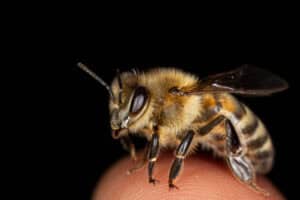
Both collect nectar from flowers, but they store it differently.
Honey bees convert nectar into honey and store substantial reserves within their combs. These reserves help the colony survive periods when flowering plants are scarce, including winter.
Bumblebees also store nectar, but only in relatively small quantities to support their developing colony. They do not produce large honey reserves suitable for harvesting.
This difference reflects their life cycles: honey bee colonies can survive through winter, while bumblebee colonies are generally seasonal.
Which Is Better at Pollinating Flowers?
Both are valuable pollinators, although their abilities differ.
Honey bees visit a wide variety of flowering plants and can communicate productive food locations to other workers. Their large colonies mean substantial numbers of bees may forage across an area.
Bumblebees can often forage in cooler conditions than honey bees. Some species also use buzz pollination, vibrating flowers to release pollen that is otherwise difficult to collect. This is particularly useful for plants such as tomatoes.
Neither type of bee is universally better at pollination. Their effectiveness depends on the plant species, weather conditions and the bees involved.
Are Bumblebees Less Aggressive Than Honey Bees?
Both honey bees and bumblebees are generally peaceful while collecting nectar and pollen. They are more likely to sting when trapped, handled or defending their nests.
Honey bee colonies may respond strongly to disturbances near their hive, particularly when large numbers of workers are present. Bumblebees can also defend their nests if threatened.
The important point is that neither should be deliberately disturbed. For more information, read our guide on whether honey bees are aggressive.
What Should You Do if Bees Are Nesting Around Your Home?
 If you’ve discovered bees entering a hole in the ground, beneath a shed or through an opening in a wall, observe them from a safe distance before taking action.
A bumblebee nest in a quiet garden corner can often be left undisturbed until the colony naturally finishes its seasonal cycle. An established honey bee colony inside a wall or chimney may require specialist assessment, particularly if it creates a safety concern.
Avoid blocking nest entrances or attempting to remove the bees yourself. Both types are important pollinators, and unnecessary disturbance can increase the risk of stings.
The Bumblebee Conservation Trust provides further information about UK bumblebees and their nesting behaviour.
Need Help Identifying Bees Around Your Property?
Knowing whether you’re dealing with honey bees or bumblebees is important before deciding whether any intervention is necessary.
Youngs Pest Control provides advice and bee management services across Greater Manchester, Cheshire and Merseyside.
Our family-run business has over 35 years of pest control experience and can help assess bee activity around homes and commercial properties.
If you’re unsure which type of bee is nesting around your property, contact Youngs Pest Control on 0161 776 9832 or 07845 815 261 for advice.