
Professional Flea Treatments In Wavertree
Get rid of fleas fast with Youngs Pest Control in Wavertree. Our tailored flea treatments ensure your home or business remains pest-free and comfortable.
- 24/7 EMERGENCY RESPONSE
- OVER 35 YEARS EXPERIENCE
- FULLY QUALIFIED & NPTA MEMBER
- DISCREET, UNMARKED VEHICLES
- DOMESTIC & COMMERCIAL
- TREATMENT OF ALL TYPES OF PESTS
Professional Flea Treatments in Wavertree
Fleas are sometimes discovered because an animal begins spending time with a different member of the household. A cat may start sleeping beside someone who is working unusual hours, or a dog may follow an owner into a room it previously ignored. Youngs Pest Control provides flea control in Wavertree when this change creates a new pattern of bites or sightings.
Properties near Wavertree Technology Park railway station can contain carpets and furnishings where flea eggs settle after falling from an affected pet. Once in the environment, these eggs hatch and develop separately from the animal.
This can result in several generations of flea stages being present around a resting area before the first obvious adult is noticed. Veterinary flea care for the pet and the environmental problem therefore need to be considered separately.
Why Choose Youngs Pest Control in Wavertree
Fast Response
We provide a fast response with 24/7 availability, ensuring your pest control needs are addressed quickly and efficiently.
Fixed Prices
You know exactly what you'll pay before work begins, giving you complete peace of mind and confidence.
Local Services
As a local service, we respond quickly and know the Wavertree area well, ensuring fast, reliable pest control solutions.
Accredited
We're members of the National Pest Technicians Association, so you can trust our professional service.
Need Help? Call Us On 0161 776 9832 For Expert Pest Control Advice On How To Identify Pest Infestations And Help Solve Your Pest Problem.
Recent Flea Treatment Visit in Wavertree
Fleas During Early-Morning Workouts
A resident near High Street contacted us after repeatedly being bitten while exercising before work. The room was used for little else, and the family’s dog normally slept downstairs.
The dog had recently begun following the resident into the room each morning and lying nearby until the workout finished. It had subsequently received veterinary flea care. We checked the floor where it settled and found flea signs around that position. The relevant indoor areas were treated, and the resident continued their morning routine. The bites became occasional and then stopped.
Fleas After a Cat Started Visiting the Loft Room
We visited a home close to Thingwall Road after fleas appeared in a converted loft room used for reading and paperwork. The owners were puzzled because their cat had always preferred the downstairs rooms.
They eventually realised the cat had started going upstairs during quiet afternoons and sleeping on a covered chair. We checked the area around this new resting place and found flea signs nearby. The affected surroundings were treated while the cat continued with veterinary flea care. The room stayed in regular use, and sightings declined without becoming an ongoing disruption.
Why Are Fleas Common in Wavertree?
Cats and dogs naturally seek comfortable places close to household activity. Their preferred locations can change when work schedules, furniture or everyday routines alter.
Around Picton Road, a newly adopted resting place can begin receiving flea eggs while older locations still contain larvae or pupae deposited previously.
Adult fleas can consequently emerge in more than one part of a property over time. This does not necessarily mean each sighting represents a separate introduction; it can reflect different stages of the same indoor flea problem.
Solve Your Problem in 3 Steps
Get In Touch
Select an Appointment
We're on our way
Signs Of A Fleas Infestation
Fleas spend surprisingly little of their lives on pets. In most infestations, the majority of eggs, larvae and pupae are hidden within the property, making them difficult to spot until adult fleas begin emerging. During professional flea treatments, technicians commonly find flea activity in warm, undisturbed areas where immature fleas can complete their life cycle.
Some of the most common hiding places include:
Carpets and rugs
Flea eggs often fall from pets into carpet fibres, where larvae develop out of sight.
Pet bedding
Blankets, cushions and baskets regularly contain flea eggs and larvae because pets spend long periods resting there.
Upholstered furniture
Sofas and armchairs can harbour fleas, particularly if pets are allowed onto the furniture.
Floorboard gaps and skirting boards
Larvae move into sheltered cracks where they are protected from light and disturbance.
Under furniture
Areas beneath sofas, beds and cabinets are rarely disturbed, providing suitable conditions for flea development.
Bedrooms
Fleas may spread into bedrooms on clothing, pet bedding or household fabrics, especially where pets sleep.
Vehicle interiors
Fleas can be transported in cars after travelling with infested pets.
Pet carriers and blankets
These items can continue to harbour developing flea stages even after pets have left the area.
Call us today on 0161 776 9832 for a fast, no-obligation quote and let us help you make your property pest-free.
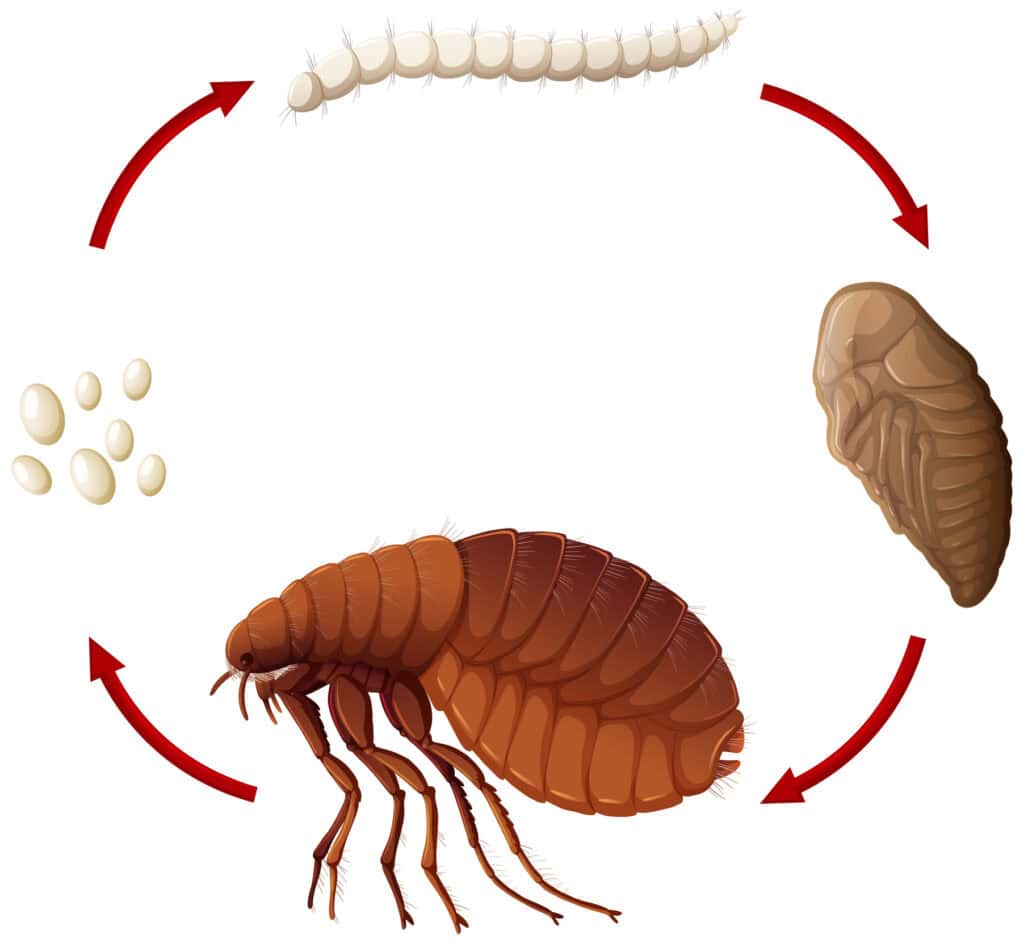
Flea Life Cycle
The flea life cycle consists of four stages: egg, larva, pupa and adult. While adult fleas are the ones that bite, they make up only a small part of an infestation. Most fleas remain hidden in carpets, pet bedding, upholstery and cracks in flooring as they develop.
- Eggs – Adult fleas lay eggs on a host, which quickly fall into carpets, rugs and soft furnishings.
- Larvae – The eggs hatch into larvae that avoid light and hide deep within carpet fibres and sheltered areas.
- Pupae – Larvae form protective cocoons, where they can remain dormant until warmth or movement signals a host is nearby.
- Adults – Adult fleas emerge, feed on a host and begin laying eggs, restarting the life cycle.
Because most of the flea population develops out of sight, professional flea treatments focus on breaking the entire life cycle rather than targeting only the adult fleas that are visible.
Preparing for Flea Treatment
To help achieve the best possible results, a few simple preparations should be completed before your flea treatment visit:
- Vacuum thoroughly throughout the property, paying particular attention to carpets, rugs, skirting boards, upholstered furniture and pet resting areas.
- Wash pet bedding, blankets and soft furnishings on the hottest temperature suitable for the fabric.
- Clear floor areas by removing toys, clothing and other items so all treatment areas are easily accessible.
- Move lightweight furniture where possible to allow access to skirting boards and carpet edges.
- Ensure pets are treated with a suitable flea treatment recommended by your vet, as treating the home alone will not eliminate the infestation.
- Leave the property for the recommended period after treatment, following the technician’s instructions.
Following these steps helps maximise the effectiveness of the treatment and reduces the likelihood of fleas continuing their life cycle inside the property.
What to Expect After Flea Treatment
It is normal to continue to see some flea activity or to get bitten during the 14days after treatment. Fleas developing inside protective cocoons may emerge over the following days or weeks, and contact with the treated surfaces helps eliminate them as they hatch. After treatment, you should:
- Expect to see some newly emerged fleas for a short time.
- Avoid vacuuming for the period recommended by your technician, then vacuum regularly to encourage any remaining pupae to emerge.
- Wash pet bedding and soft furnishings as advised.
- Ensure pets receive appropriate flea treatment from a vet or suitable pet healthcare provider if required.
- Follow any aftercare instructions provided by your technician.
- Vacuum the day before the technician arrives for the second visit.
As the treatment continues to work and the flea life cycle is interrupted, flea activity should gradually decline until the infestation has been eliminated.
Our Happy Customer Reviews
EXCELLENT Based on 242 reviews
 Posted on Google
 Isabella
Trustindex verifies that the original source of the review is Google.
Great and fast service. No more wasps for us. Thank you.Posted on Google Vincent SimpsonContacted Youngs to deal with and active wasps nest. Superb communication from the very first phone call. The team (Scott + partner) arrived the very next morning add dealt with the problem rapidly and efficiently giving all relevant advice in a very professional and friendly manner. Very impressed with the entire service and very competitive pricing. Would not hesitate to call them for any pest control issues in future.Posted on Google
 Gary ReardenGreat service from first telephone call to completed job.Posted on Google
 Margaret Wilding
Trustindex verifies that the original source of the review is Google.
Arrived on time. Very pleasant and explained my requirements regarding safety and handed me a business card should I need to recallPosted on Google Susan ThomsonVery quick to respond and deal with the wasps nest we had! Thank you!Posted on Google
 Louise Ollerton⭐⭐⭐⭐⭐ Fantastic service from start to finish! They came out and successfully sorted our wasp problem quickly and professionally. Really friendly, helpful and reassuring. Within just 2 hours of them leaving, the wasp activity had already started to slow down noticeably, which was such a relief. We now have peace of mind knowing the problem has been dealt with. Would definitely recommend their services!Posted on Google
 Andy FrancisResponsive and professional. And most importantly, were able to deal with the problem quickly. Clear communication throughoutPosted on Google
 Mark JamesonFantastic, polite, fast service and positive results, would recommend them to anyonePosted on Google
 Josh MoranPerfect - virtually all wasps gone within hours of treatment. All wasps gone 24 hours later
Our Flea Treatment Process
Step 1: Inspect the Property
We inspect the affected areas to assess the extent of the flea infestation, identify where flea activity is concentrated, and determine the areas most likely to contain eggs, larvae, and pupae.
Step 2: Apply Professional Flea Treatment
A professional-grade insecticide is applied to carpets, rugs, upholstered furniture and other areas where fleas commonly hide and develop, targeting the infestation throughout its life cycle.
Step 3: Aftercare & Follow-Up
Following treatment, it is normal to see some flea activity as newly emerged adult fleas come into contact with treated surfaces. To allow the treatment to remain effective, we advise avoiding vacuuming or mopping treated areas until the day before your scheduled second visit, unless your technician advises otherwise. This helps maximise the treatment’s effectiveness and ensures the best possible results.
Our Pest Control Experts Cover The Following Areas Near You.
We provide professional pest control services throughout Wavertree, the borough of Liverpool, covering L15. We also work in nearby locations that include:
We also treat all types of pests — see our Wavertree pest control page for more.
Frequently Asked Questions
How do I know if I have a flea infestation?
Common signs include itchy bites, seeing small jumping insects, pets scratching more than usual, and finding fleas or flea dirt in pet bedding, carpets or upholstered furniture.
Can fleas infest a home without pets?
Yes. Fleas can be brought into a property on clothing, footwear or second-hand furniture. They may also remain in a vacant property after previous occupants or pets have left.
Do I need to leave my property during treatment?
Yes. You, your family and your pets will usually need to leave the property for a specified period while the treatment is carried out and the products have dried. Your technician will explain the required re-entry time.
Why do fleas keep coming back?
Fleas often appear to come back because most of the infestation is hidden as eggs, larvae and pupae within carpets, upholstery and other soft furnishings. Adult fleas may continue to emerge for several weeks after treatment as they hatch from protective cocoons. Following the preparation and aftercare instructions, including any recommended follow-up treatment, is important for breaking the flea life cycle completely.
Where do fleas hide?
Fleas commonly hide in carpets, rugs, upholstered furniture, pet bedding, floorboard gaps, skirting boards and beneath furniture. While adult fleas spend time on a host, the eggs, larvae and pupae are usually found in warm, sheltered areas around the property, making them difficult to detect without a thorough inspection.
Should my pets be treated as well?
Yes. If pets are the source of the infestation, they should receive appropriate flea treatment from a vet or a suitable pet healthcare provider. Treating the property without treating affected pets can lead to recurring flea problems.
Can fleas bite humans?
Yes. Although fleas prefer to feed on animals such as cats and dogs, they will also bite people. Flea bites are commonly found around the ankles and lower legs and can cause itchy, irritated skin.
What time of year are fleas most active?
Fleas are often more noticeable during the warmer months, but heated homes allow them to remain active throughout the year. Indoor infestations can therefore occur in any season.
How Weather Affects Fleas In Wavertree
Flea infestations can occur throughout the year in Wavertree, especially in heated homes where warm indoor conditions allow fleas to remain active. During spring and summer, pets are more likely to pick up fleas outdoors and bring them into the property. Once inside, fleas can quickly spread through carpets, upholstery and pet bedding, where they continue developing until professional treatment breaks their life cycle.
Weather in Wavertree, Merseyside
Loading current conditions…